I designed the back office vision for a rebuilt retail platform.
Hub was the new back office for the company's rebuilt retail platform. I designed every page of its vision, from reports customers build for themselves and an app marketplace that lets each retailer switch on exactly what its business needs, to AI that predicts stockouts before they happen, and presented it to the people it was built for at the company's annual Summit.
- Audience
- Enterprise retailers
- My role
- Head of design
- Launch
- Unveiled in a dedicated back-office session at the company's annual Summit
The screens and descriptions in this case study use mock data and omit confidential details to respect NDA agreements.
The challenge
When the company decided to rebuild its 25-year-old retail platform, it started with Storefront, the new point of sale system. Hub came next as the new back office, starting with inventory, reporting, security, and permissions.
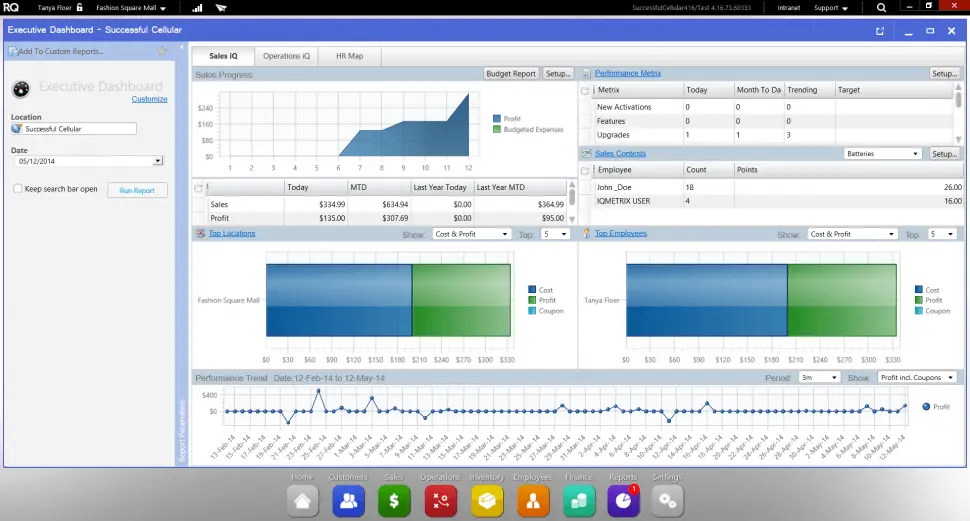
The back office of RQ, the old platform, had over 200 static reports, but customers only used about 15 of them. Every time a client needed a new data point or column, the company built an entirely new report for them.
Because these reports were so heavy, they timed out constantly. The largest ones required a database administrator to run them manually behind the scenes, delivering results to the customer outside the product.
Why previous fixes failed
The company tried several times over the years to offer better reporting, but ran into the exact same issues every time.
The problem was structural: reports ran on the same databases that processed live store sales. On high-volume retail days like Black Friday, reporting was turned off entirely so a large query could not crash the system and stop stores from selling.
No interface update could fix a database conflict. Rebuilding the platform from the ground up finally allowed the company to fix the root cause, giving me the opportunity to design reporting around what customers actually needed.
Self-serve reporting & plain language search
Instead of forcing users into rigid, pre-built tables, I designed reporting around the questions people ask. A user selects a category like inventory or commission, picks the specific metrics they want, and customizes the view. Reports can be scheduled to run automatically in the background and emailed directly, so no one sits waiting on a loading screen.
To take the vision a step further, I designed an AI search capability: managers can simply type a plain-language question into a search bar, and the system pulls the answer directly from the data.
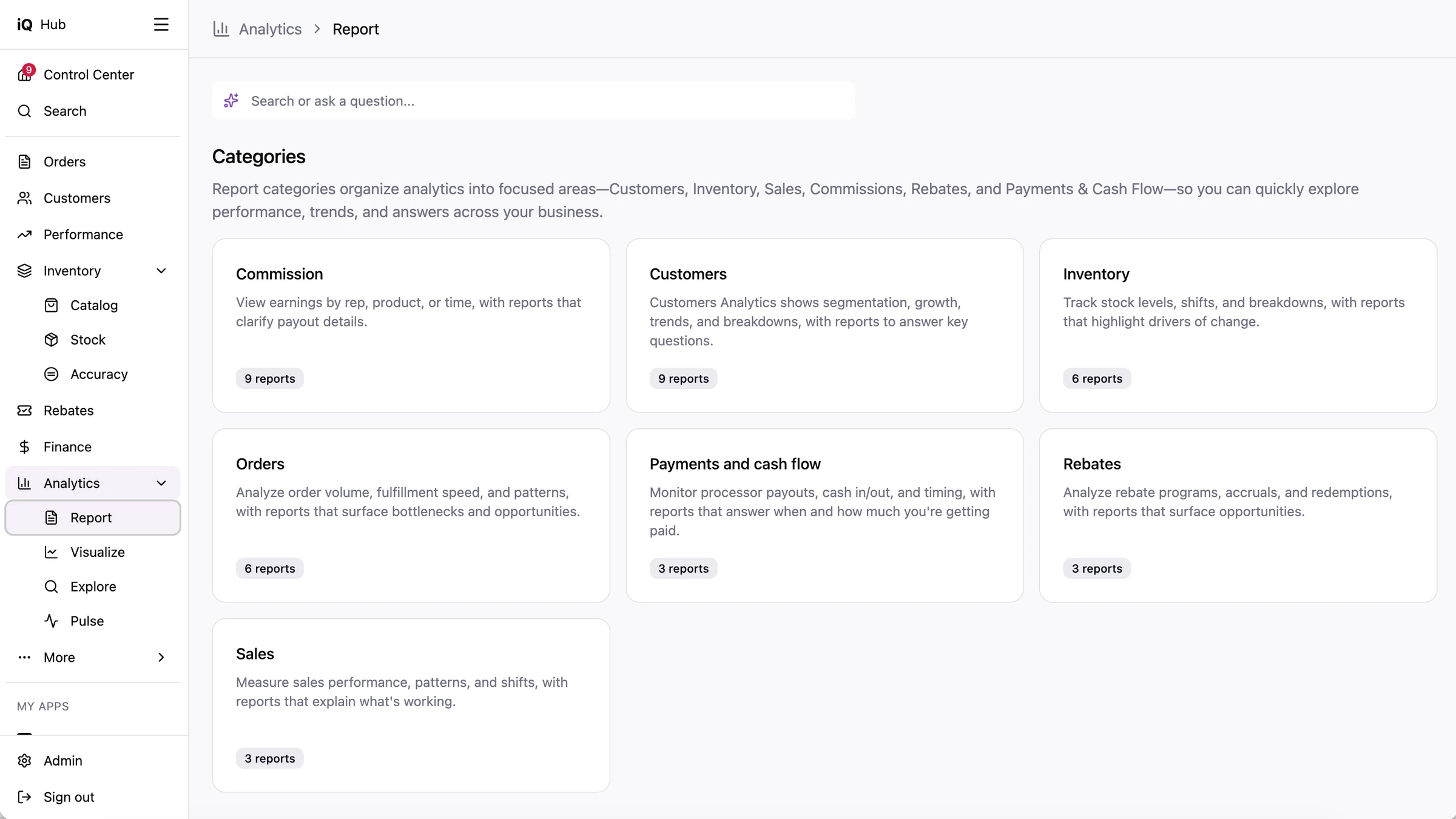
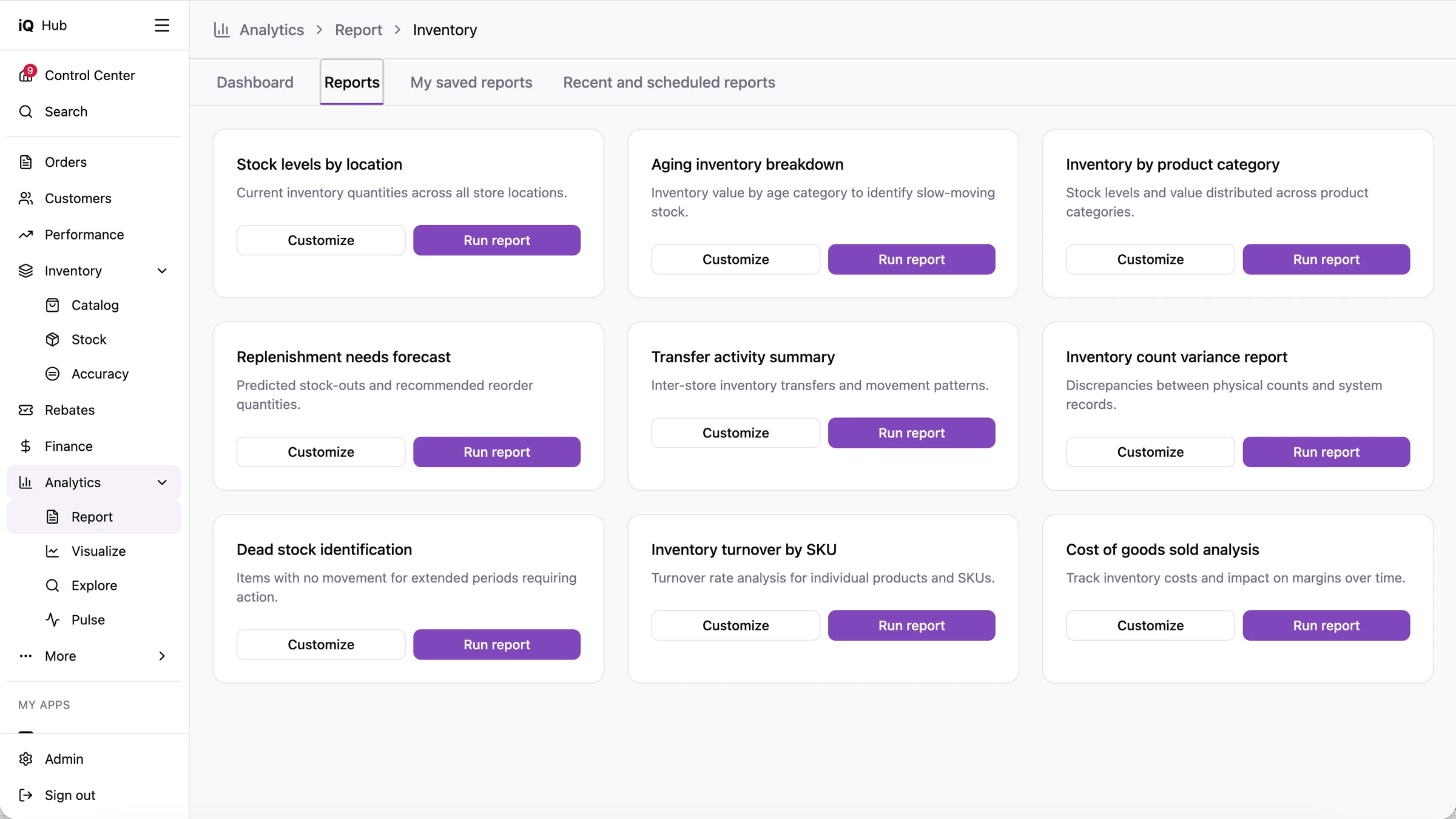
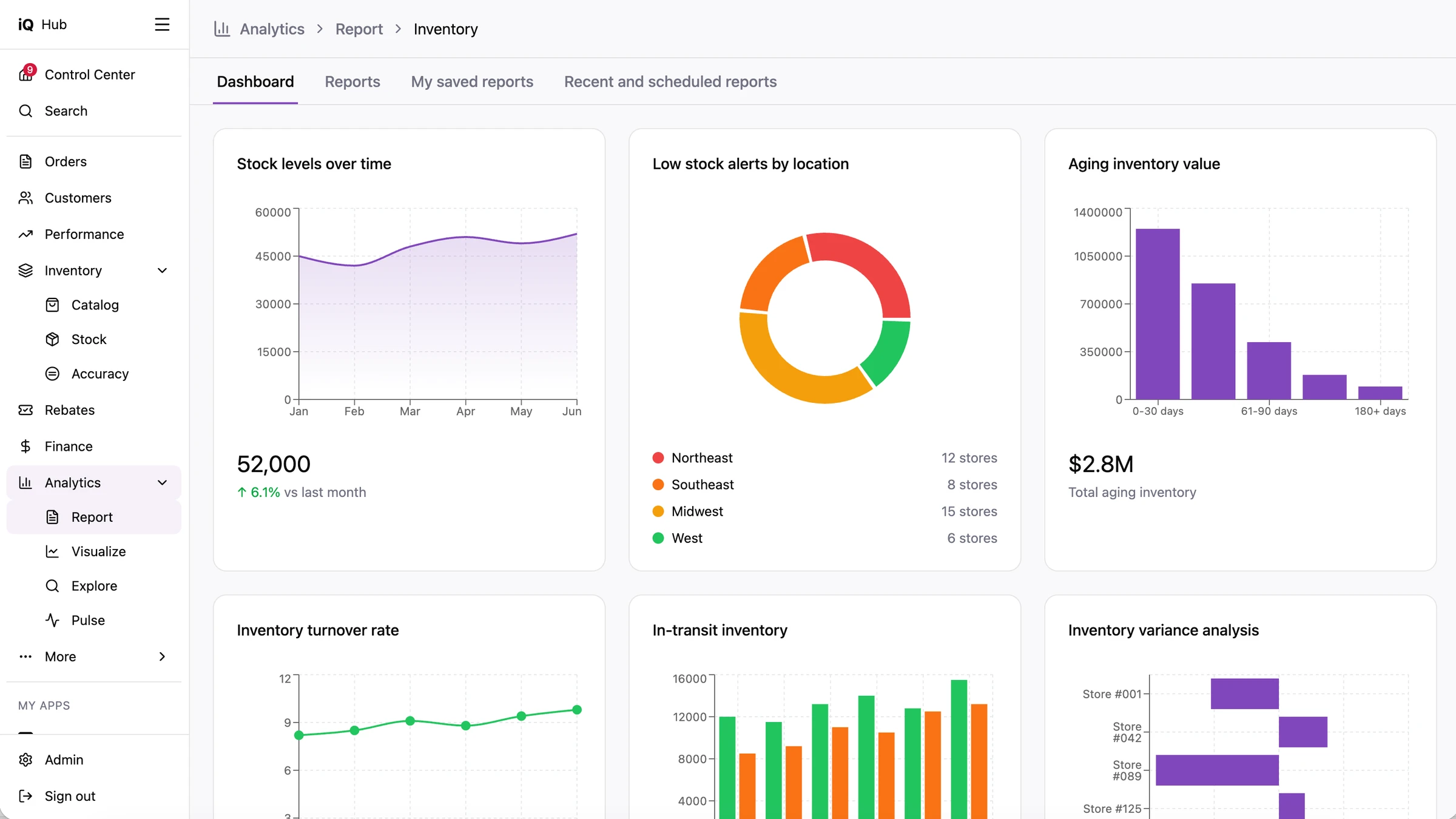
Category view featuring an integrated search bar to type or ask questions directly.
Hub: an extensible marketplace
Beyond reporting, Hub was designed as the answer to all the custom code that had accumulated in RQ. Instead of building bespoke software for individual clients, each customer could toggle on the specific applications their business needed, with modular billing to match.
The marketplace included first-party products like Storefront, alongside third-party partner applications like Shiftlab for staff scheduling and Statflo for customer messaging. Enterprise clients with their own development teams could build custom applications on top of the platform, or hire the company's services team to build for them.
I designed every page of Hub and built the interactive prototypes using Figma Make, an AI tool that turns static designs into working prototypes. This allowed clients and internal teams to click through the live vision instead of imagining how it would work from static screens.
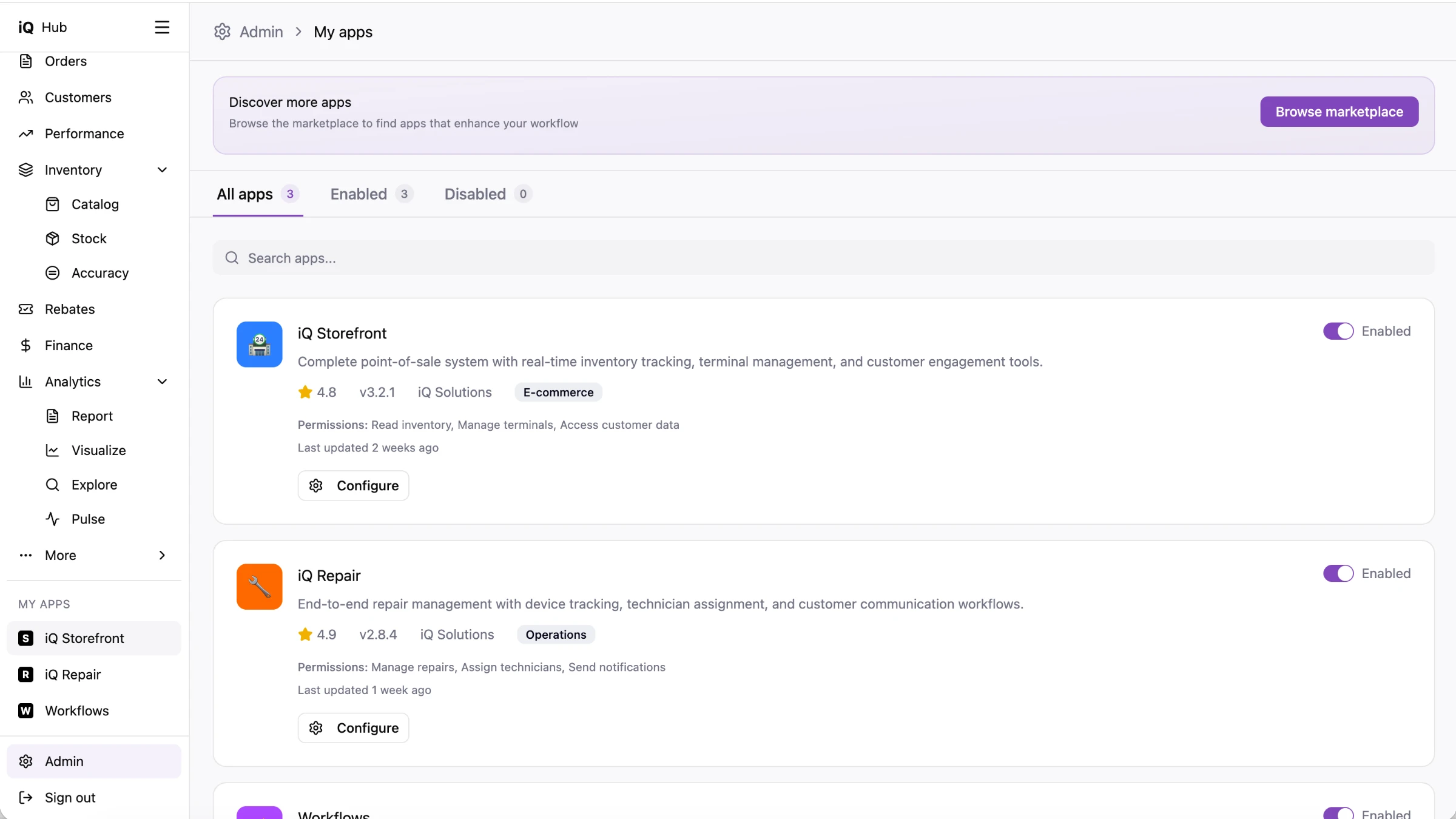
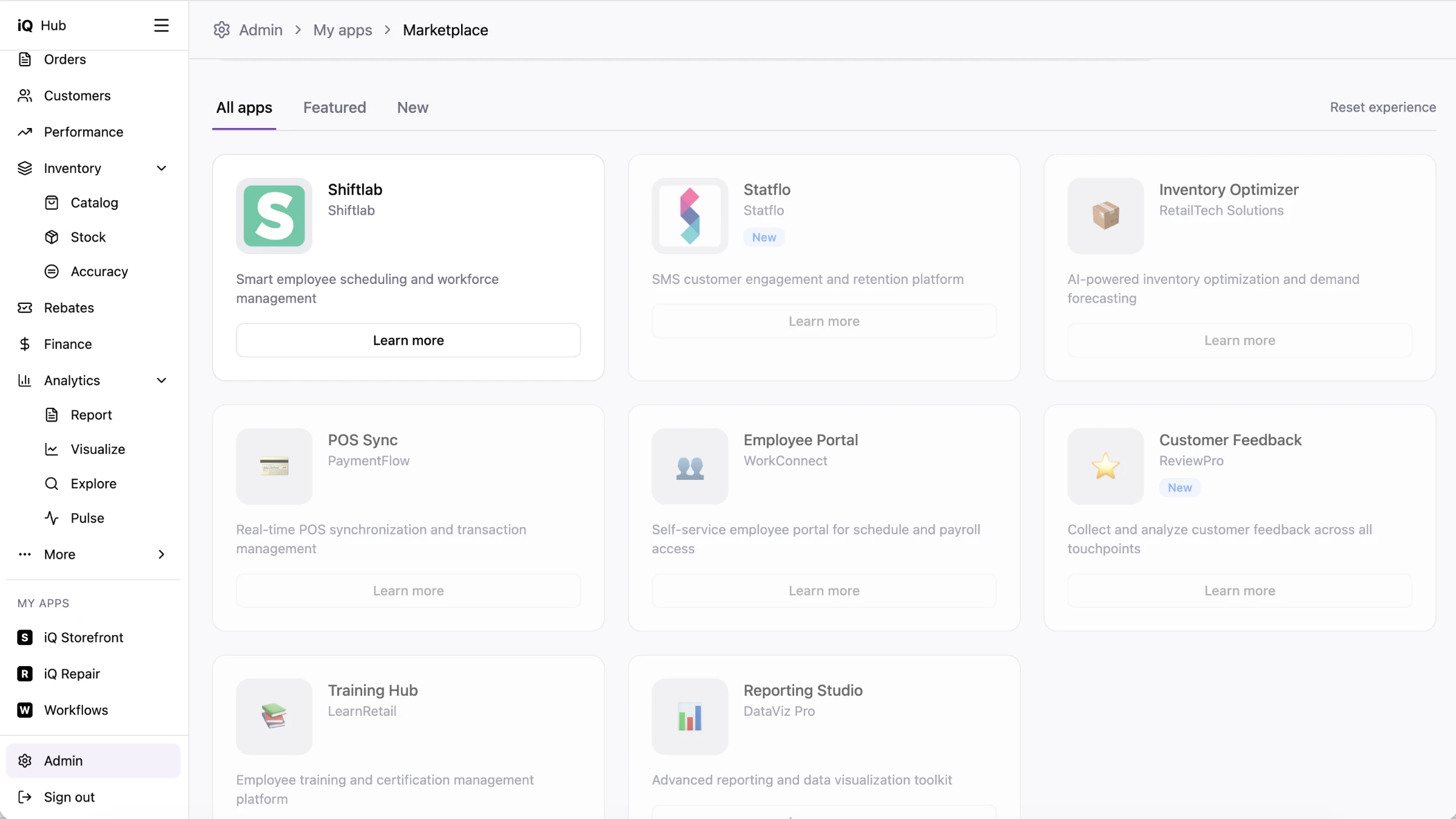
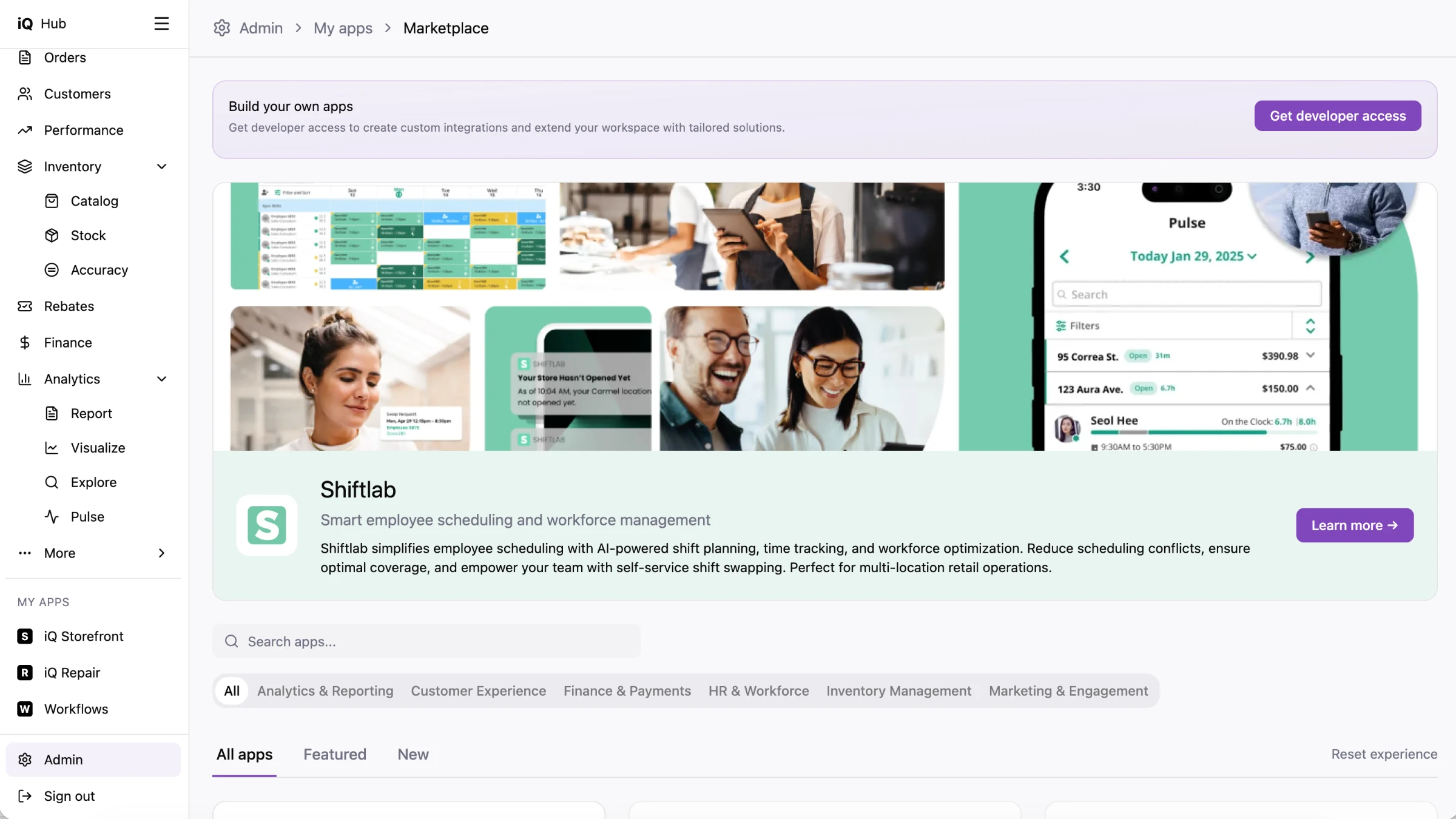
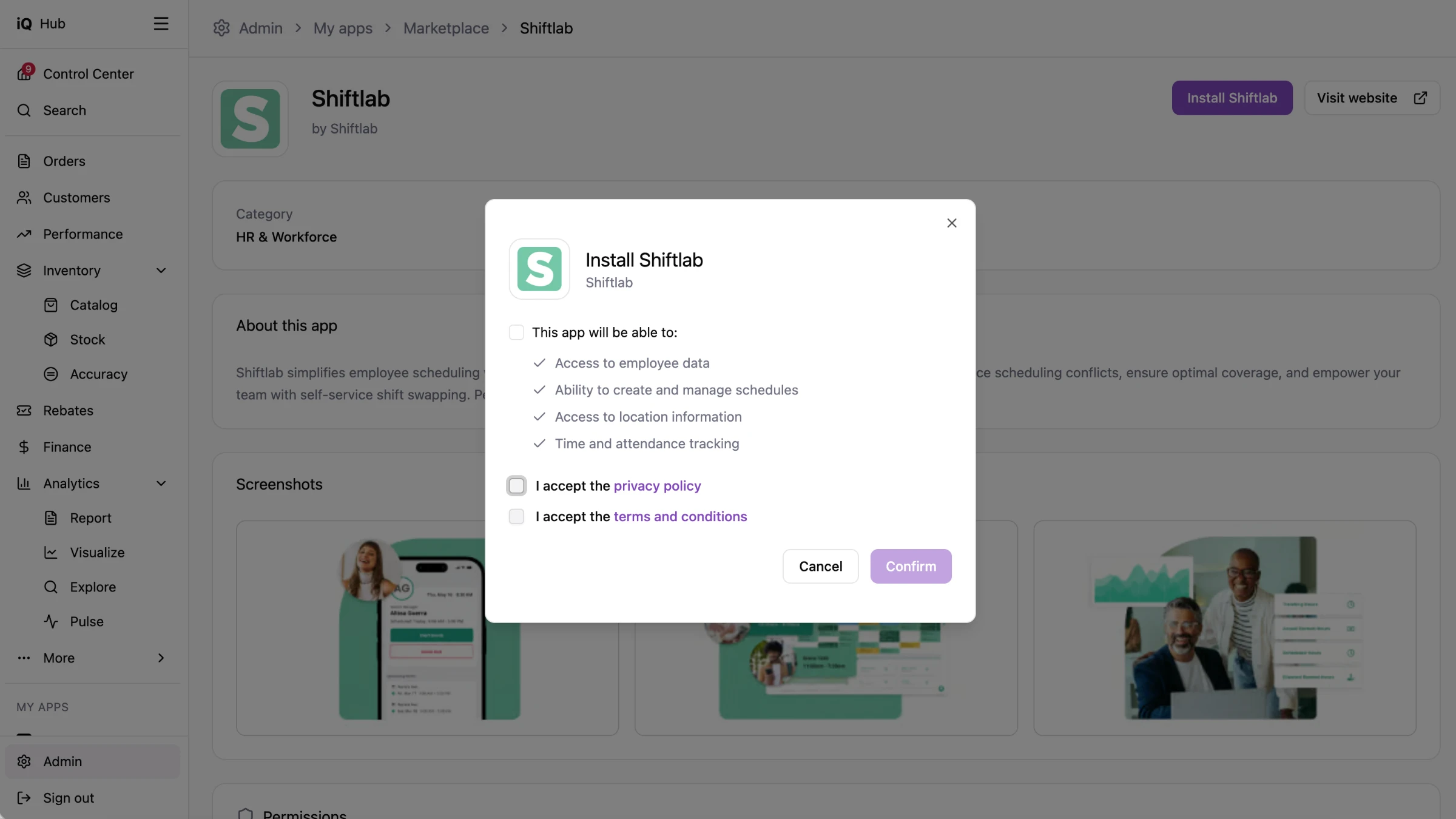
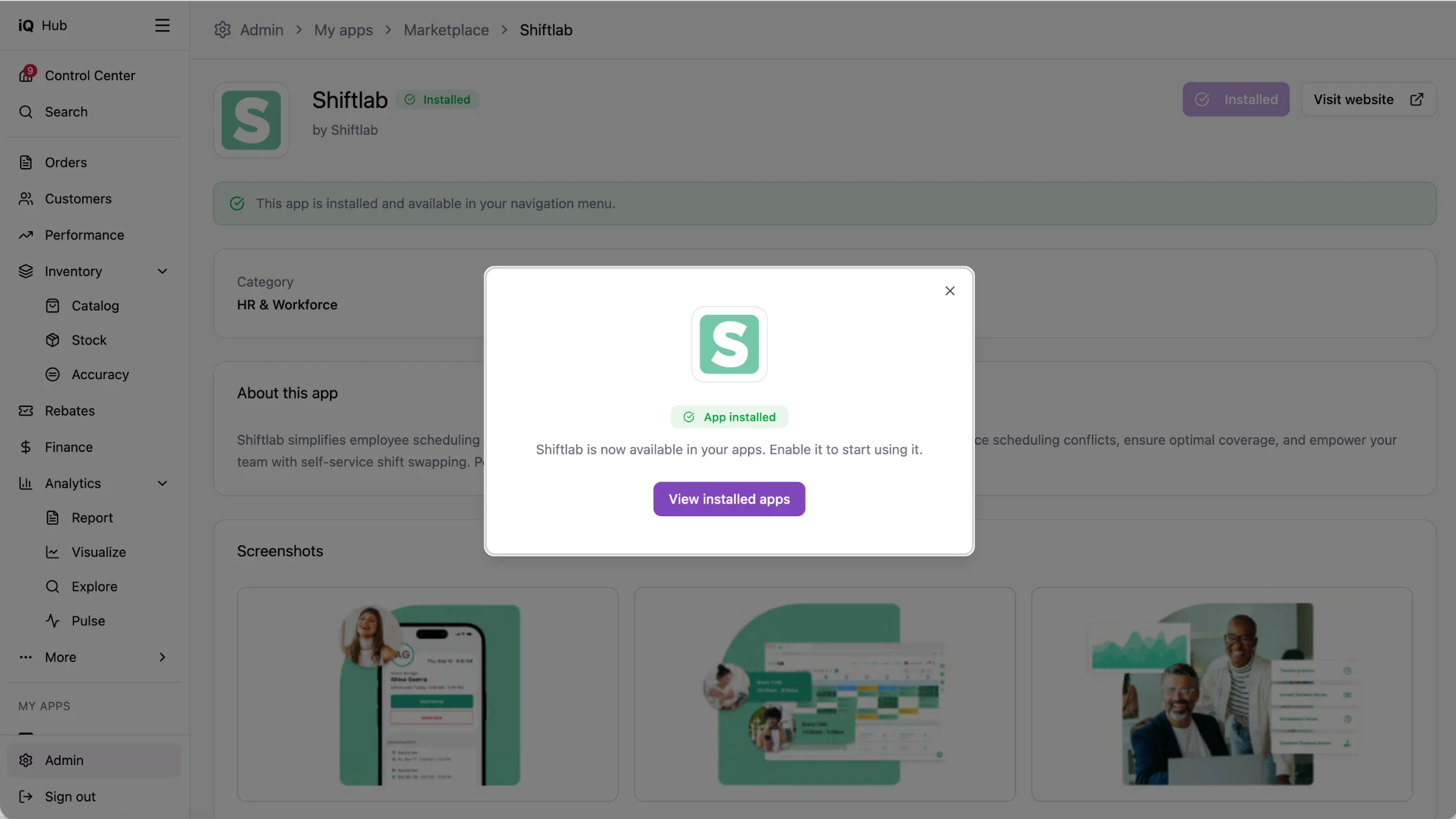
Installed apps directory showing active tools with simple switches to turn them on or off.
Predictive stock management
Hub also brought daily back office administration into one place, including inventory, reports, and store hardware management.
Instead of requiring store managers to spend hours digging through stock sheets, we designed an AI assistant to monitor inventory levels continuously in the background. Hub predicts which products will run out, where, and how soon, then suggests the purchase orders and inter-store transfers needed to prevent stockouts. Each recommendation includes a confidence score and calculates the total revenue protected.
When I left the company, our engineering team was actively building this predictive inventory capability.
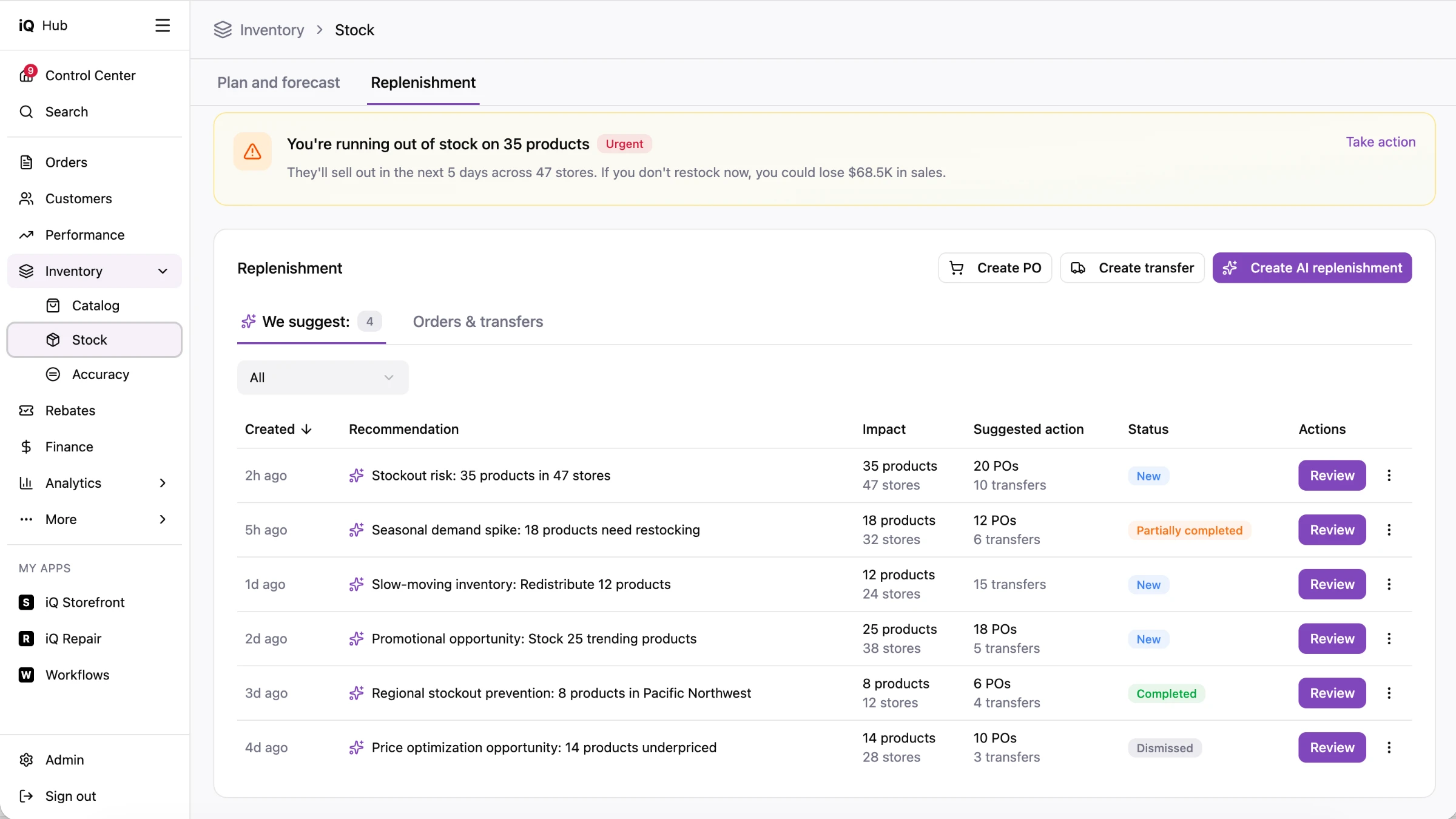
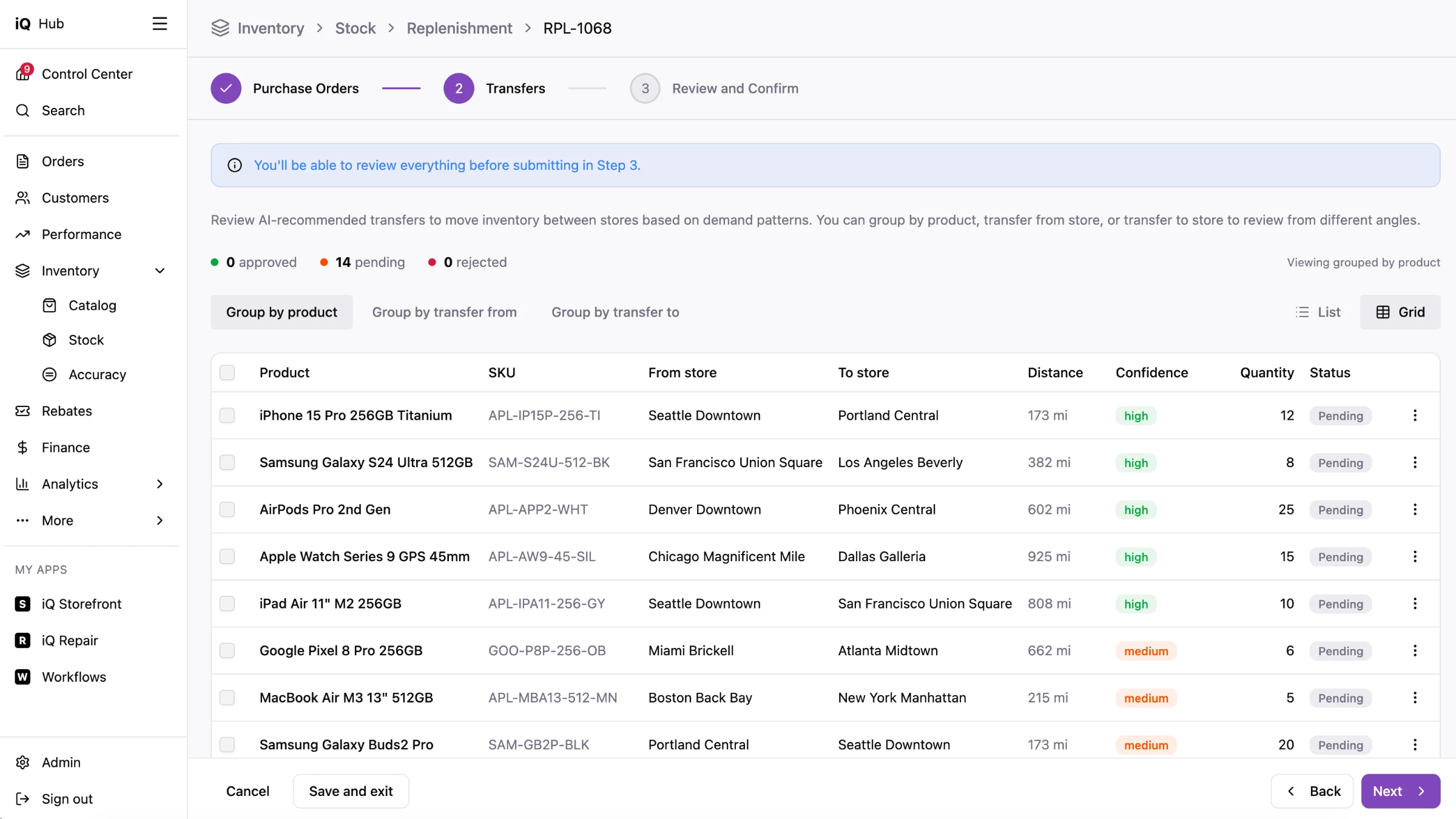
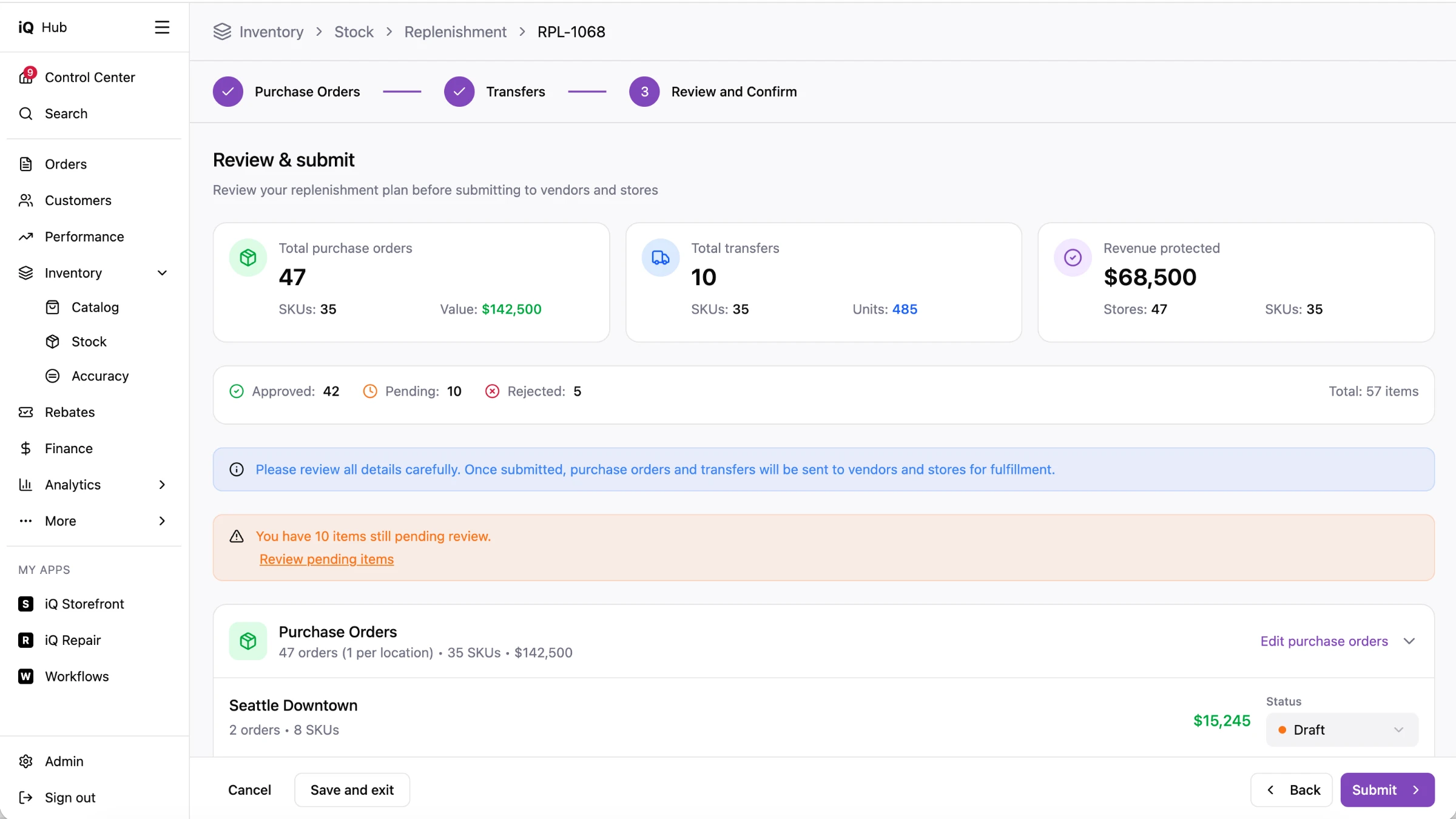
Replenishment alert highlighting that 35 products will run out across 47 stores in the next five days, with suggested purchase orders and transfers.
Presentation & progress
At the company's annual Summit, I presented the full vision for Hub in a dedicated session to a room full of the back office leaders, store managers, and operators it was designed for.
Hub represented the future direction of the platform's back office experience. When I left the company, the engineering team was building the AI inventory features, reporting, and order management. No customers were using Hub in production yet.
What I would do differently
I would bring in experts from every part of the back office sooner.
I have facilitated many design sprints throughout my career, including one for the company's broader vision of retail, but I did not run a dedicated design sprint for Hub. Running a structured sprint with specialists who knew inventory, financial reconciliation, and reporting inside and out would have re-imagined the back office from more operational angles than I could cover alone.