Verizon asked the company I worked for to support business sales. The real problem was the manual work between the sale and the retail software, and only the reps could show me.
The retail software the company I worked for made was built for sales to consumers, and changing it would have taken too long. Research with the retailers showed the real cost: reps typing every phone line of a sale in by hand, and staff spending days fixing the errors.
- Client
- Verizon, for its authorized retailers
- My role
- Product manager and senior UX designer
- Result
- Launched as TE Sync
The screens are from my design files and use made-up data. The product that shipped may look different.
What was going on
Verizon came to the company I worked for to support business sales for its authorized retailers, some with a few hundred stores and some with thousands. Their reps sold phones to businesses through a portal the carrier ran, and each sale then had to go into the company's retail software. One business sale could include many phone lines, one for each phone.
The retail software was built for sales to consumers, and it had big gaps when it came to selling to businesses. Changing it wasn't an option. It was old, and reworking it would have caused too many problems and taken too long.
A rep also couldn't enter one of these sales straight away. The carrier had to ship and activate each line first, which could take days. Until then, reps kept checking the portal and tracked their waiting sales by hand.
What I noticed
Before the team designed anything, I wanted to see how the retailers actually did this work. I talked to all five of the largest retailers and about half of the smaller ones.
On one call, a retailer shared their screen. They had two spreadsheets open. One tracked every business sale still waiting on the carrier. The other was a list of data-entry errors to fix. It had 270 lines, five people were going through it line by line, and they had been at it for two days.
The same retailer had ten full-time staff working on errors, reconciliation, reporting and commission. Entering one sale took their reps about 30 minutes.
The errors also held up money. When a sale was entered wrong, it didn't match the carrier's records, and the carrier didn't pay the retailer for it. The retailer then paid its reps late, sometimes by months, and reps had stopped trusting that they would be paid correctly.
None of this was in the brief. The cost was in the checking, tracking and typing between the sale and the retail software, and I only saw it because the retailers showed me how they worked.
What the team built
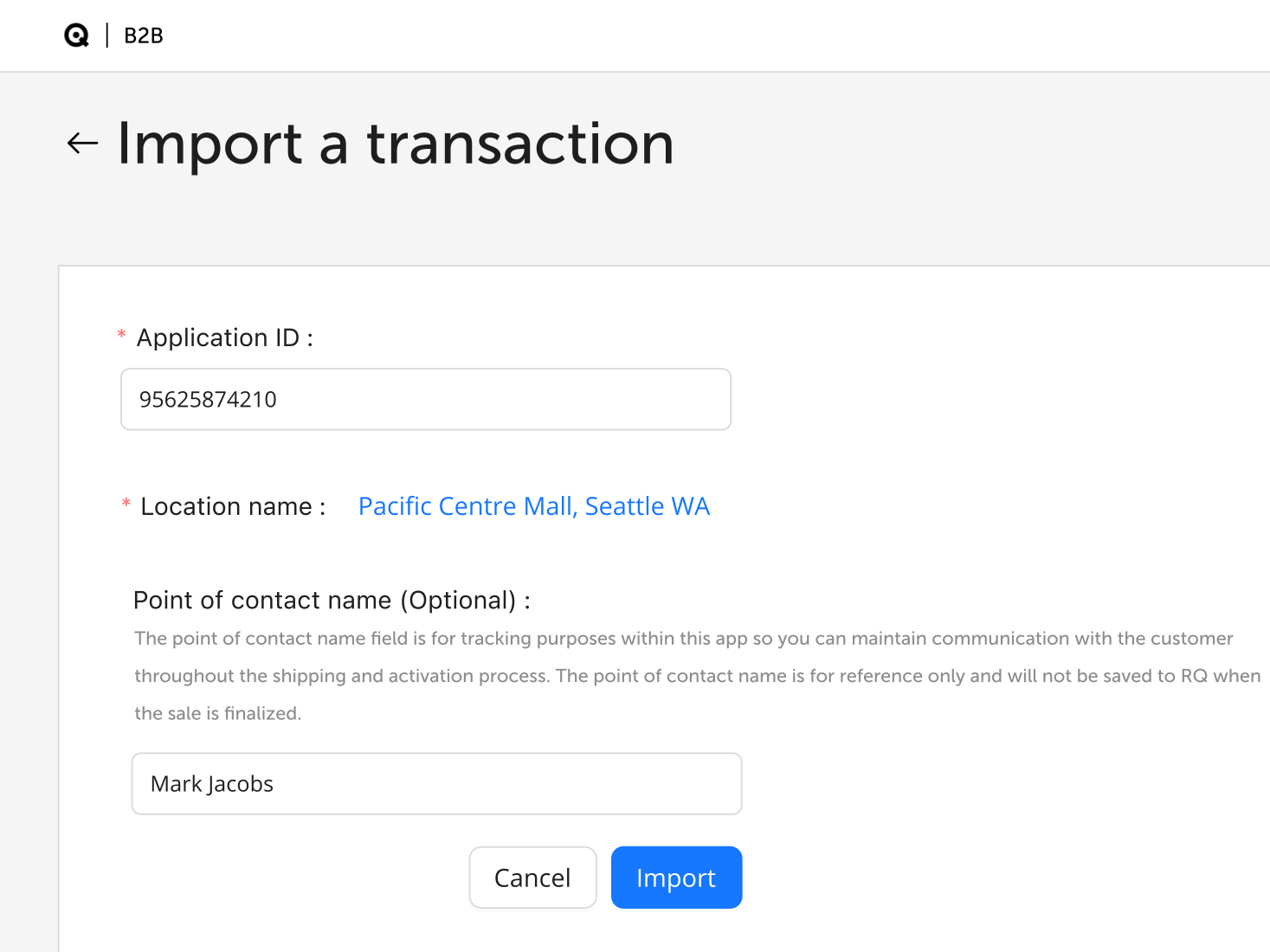
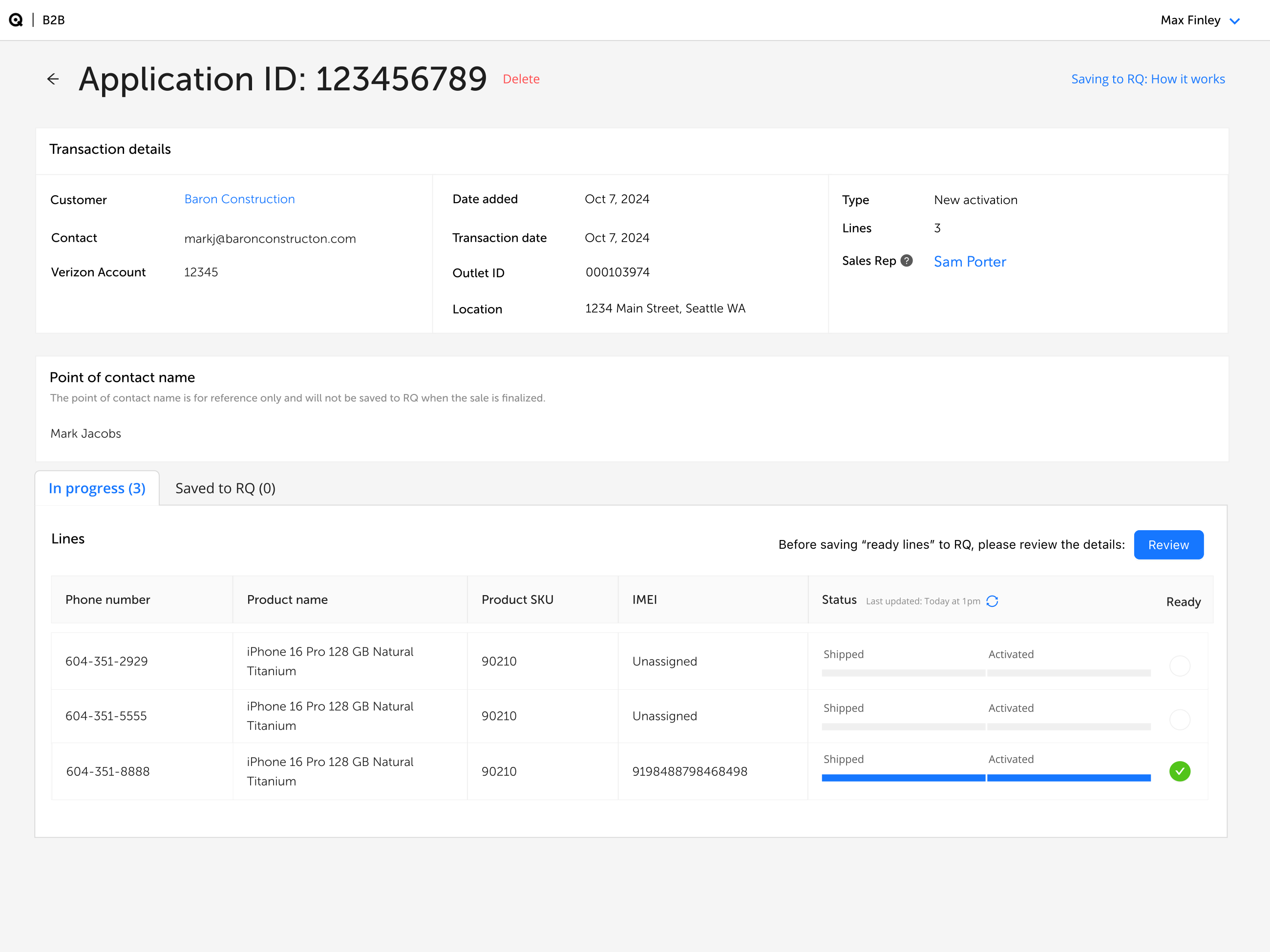
Because the retail software couldn't change, I designed a separate app for these sales. As soon as a sale is done, the rep enters the application ID from the carrier's portal. The app brings in the whole sale and checks each line's status with the carrier, so nobody has to keep checking the portal.
The app marks a line as ready once the carrier has done its part. The retailers didn't want lines going into their software on their own, so the rep reviews the ready lines and saves them in one step. Each save creates one invoice with every ready line, and nobody types a line in by hand.
When the app found more than one match for a business, it asked the rep to pick the right one, so the same customer wasn't entered twice. I worked with the company's developers and the carrier's from the first designs through to launch.
What changed
TE Sync launched, and it's still sold to the carrier's retailers today. I don't have numbers from after launch. Reps no longer check the carrier's portal over and over, keep a spreadsheet of waiting sales, or type lines in by hand. Those were the source of the errors that took the back office days to fix and held up the retailer's payments.
What I'd do differently
I would try to understand the cost of the problem from the start. I went in thinking about how to make it work, not about what the problem was costing the retailers.
If I had measured the errors, and the time reps and the back office lost to them, before the team built anything, I could have measured adoption, errors prevented and time saved after launch, and put a real number on what TE Sync was worth.