How analytics and user interviews changed the requirements for a new app.
- Role
- Senior Product Designer | Product Manager
- Outcome
- The company wanted my team to rebuild a legacy web app as a native app. I used analytics and user interviews to plan and design what my team built, instead of just rebuilding the legacy product.
The problem
myRQ was the company's legacy web app for retail managers. Over the years, the web app had filled up with reports, operational tasks and employee tools. An executive asked my team to rebuild myRQ as a native app for phones, and the brief was to bring all of those features across.
Before designing anything, I wanted to know which of those features people actually used.
The research
I interviewed people who used the existing app, and defined the core persona. The persona was not everyone who used myRQ. The persona was the sales manager responsible for several stores: the district or regional manager who needs to know, at any moment of the day, how every store is doing against its sales targets.
I then analysed the app's analytics. Managers ran about four reports over and over, and barely touched the rest of the app. About 81% of all use came from that small cluster of reports, and 13 features were used rarely or never.
I interviewed managers about those four reports to learn what they were looking for. They were checking whether their stores would hit their targets, and they ran the same report about six times a day to find out. The numbers they needed were gross profit, gross sales and quantity sold.
Before launch, a handful of district managers tested myRQ in a short beta, to check that the app was useful and easy to use.
Decisions and trade offs
I decided not to bring every feature of the web app across. I designed myRQ for one persona, the manager responsible for several stores, and built only what those managers needed every day: their sales numbers and authorization codes. The trade off was leaving most of the web app's reports, operational tasks and employee tools out of the new app.
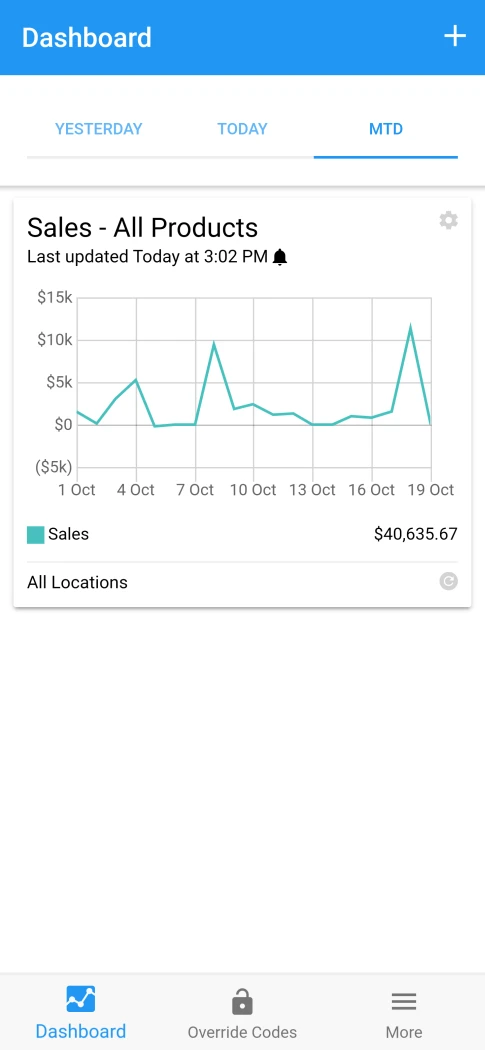
I decided the dashboard would open on the three numbers managers cared about most, so a manager could check whether their stores were on target in seconds instead of running the same report over and over again.
I decided that myRQ needed to go from research to launch in three months, so my team could launch the app live at the company event. I planned three more features: sales data for each employee, invoice lookup to help solve a customer's problem, and a way to reorder the cards on the dashboard. I held those features back so my team could hit the timeline.
The work
Your own dashboard
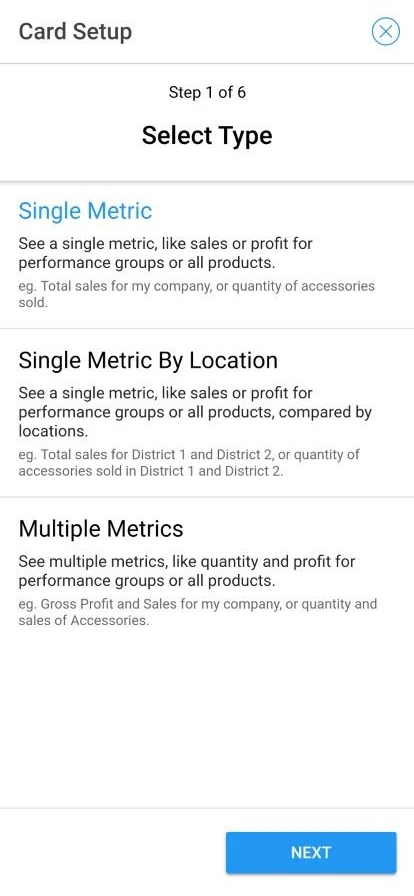
The dashboard puts gross profit, gross sales and quantity sold on the first screen. Each manager can customize the dashboard with one or multiple metrics, for all of their stores or for a single location.
Notifications
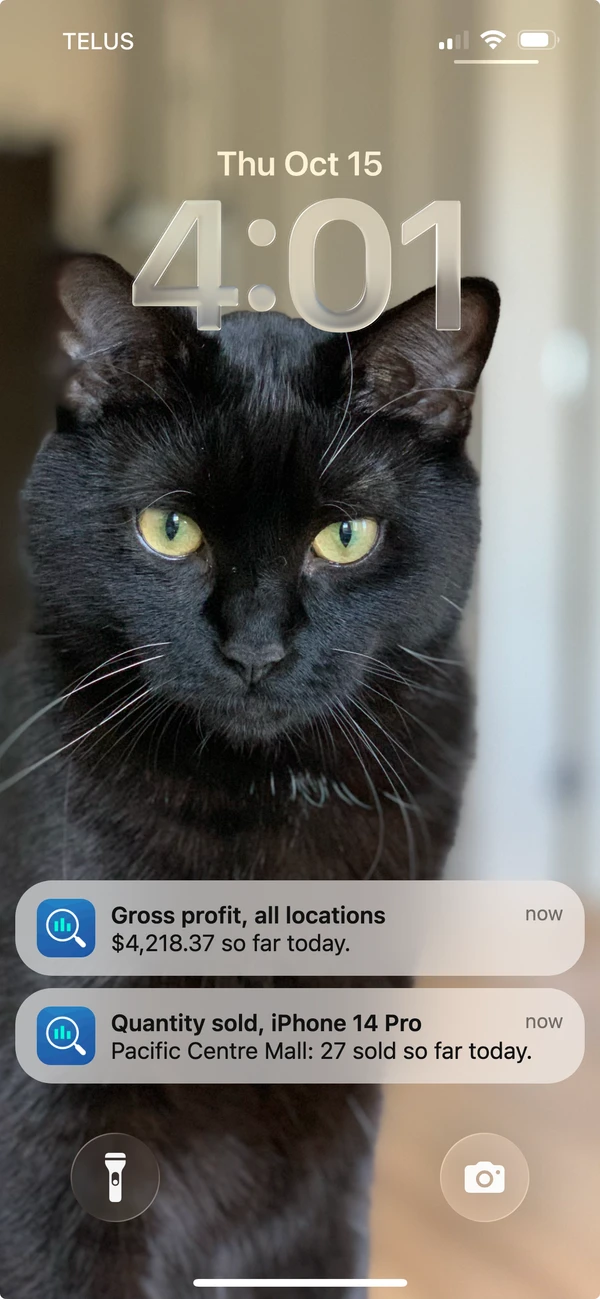
Instead of opening the app to see the numbers, managers can schedule notifications with the data they care about most, delivered straight to their lock screen.
Authorization codes
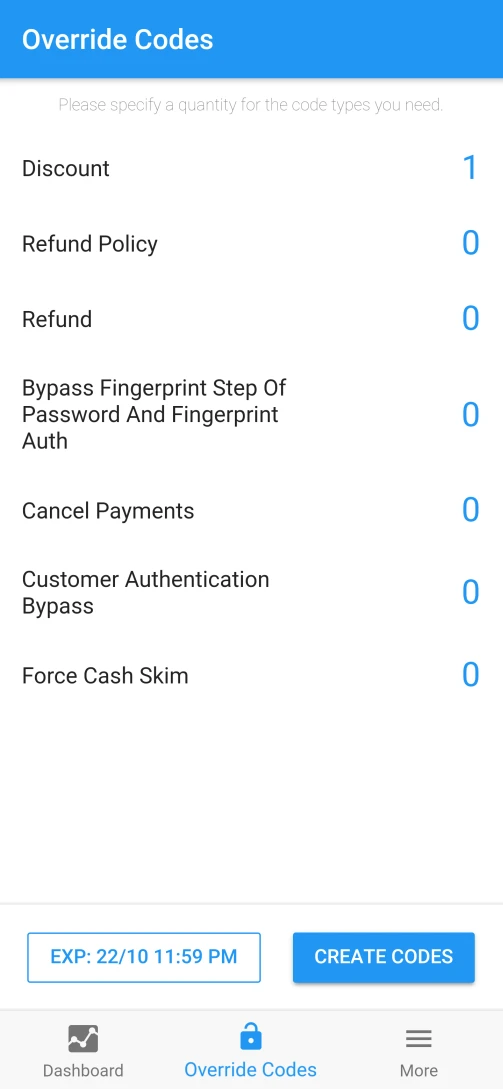
Authorization was already a known pain for managers. Store staff needed a manager's approval for discounts, refunds and other exceptions, wherever the manager happened to be. I designed a way for managers to create authorization codes for their staff, no matter where they were. On the override codes screen, the manager chooses how many codes of each type to create and when the codes expire, then sends the codes to the store by text or email.
Outcome
In three months, I did the research, planned the product, designed the app, and worked with the development team as the product owner. myRQ was the first progressive web app the company had built, made with the Ionic framework and released in the Apple App Store and Google Play.
Because of the analytics and the customer interviews, my team didn't rebuild the web app just because the web app existed. Without that research, my team would have spent a ton of extra time building things nobody used, and would never have hit the timeline with a product that people loved and used.
I announced myRQ live on stage. As I spoke, the audience pulled out their phones, and I watched screens light up across the room as people installed the app. Back at the office, my team watched the install numbers jump. myRQ had thousands of installs and users within the first couple of weeks.
Managers no longer had to run the same report six times a day to know whether their stores would hit their targets. When I left the company, thousands of managers were still using myRQ every day, and no new feature had been added since launch. The development team later rebuilt the app in React to clear technical debt, as an exact copy, with no new features and no new design. myRQ has now been in the App Store for eight years.
What I would do differently
The company decided to stop investing in myRQ, so the three features I planned were never built. All three are small, and all three are still the features managers ask for most.
I would have advocated harder for those features to be added to round out the findings from my research. The three features could have become an add on companion app, worth an additional subscription fee per user. I also would have pushed for a different monetization strategy. myRQ was offered for free with certain subscriptions, and the company could have offered myRQ to employees, to track individual performance rather than store performance. myRQ could have been the start of a gamification experience for hundreds of thousands of sales reps.